
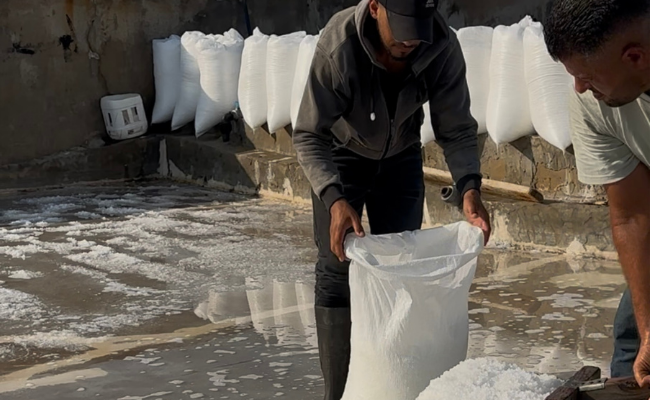
At first glance, salt-making can seem almost obvious. Take seawater. Leave it under the sun. Wait for the water to evaporate. Collect the salt. But according to Georges Sleiman of Evaura, that is one of the biggest misconceptions about traditional salt production.
Seawater is not simply water and salt. It carries sediments, sand, small stones, microorganisms, plankton, and traces of pollution. Producing salt that can actually reach the table therefore requires much more than evaporation. It requires a process built around three things: sun, wind, and timing.
The first 20 days
The process begins by bringing seawater into the large salt ponds. There, it remains for around 20 days. This first stage gives the water time to settle before it is transferred from the larger ponds into smaller ones, where the next phase begins.
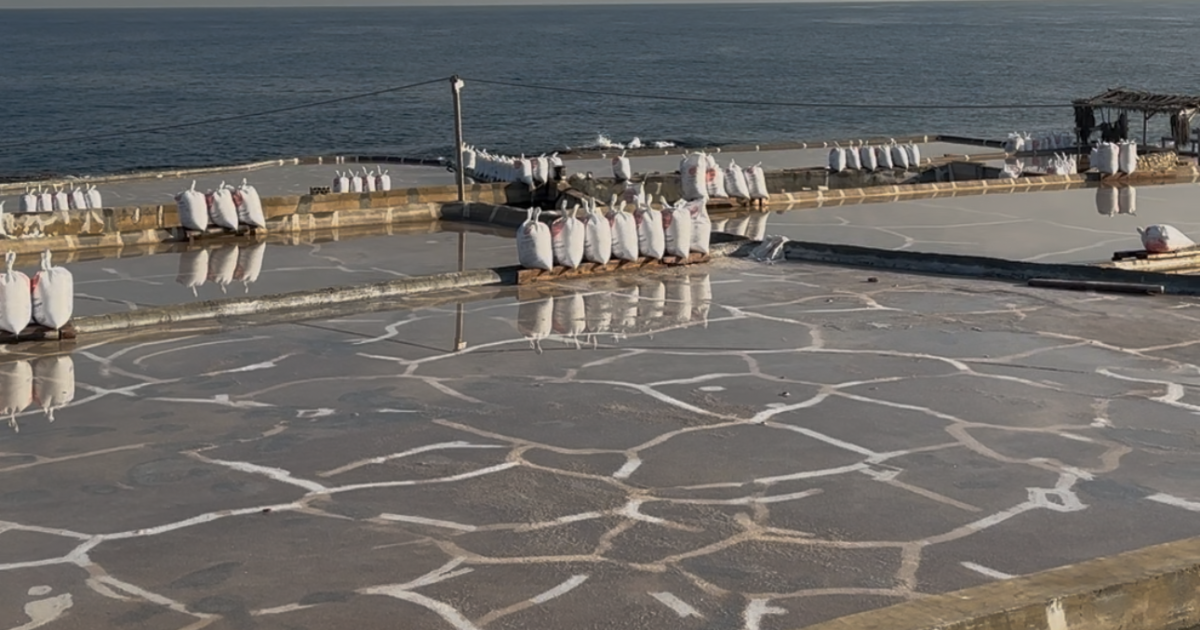
Once moved, the water remains in the smaller ponds for approximately another 20 days. But even then, the salt that first appears is not the salt that eventually reaches the table.
It is the salt you don't keep
For roughly the first 12 or 13 days in the smaller ponds, nothing is collected. Then the first crystallization begins. This initial salt is not suitable for consumption, so it is swept aside and removed. Only after that stage is the pond considered ready for edible salt to begin forming.
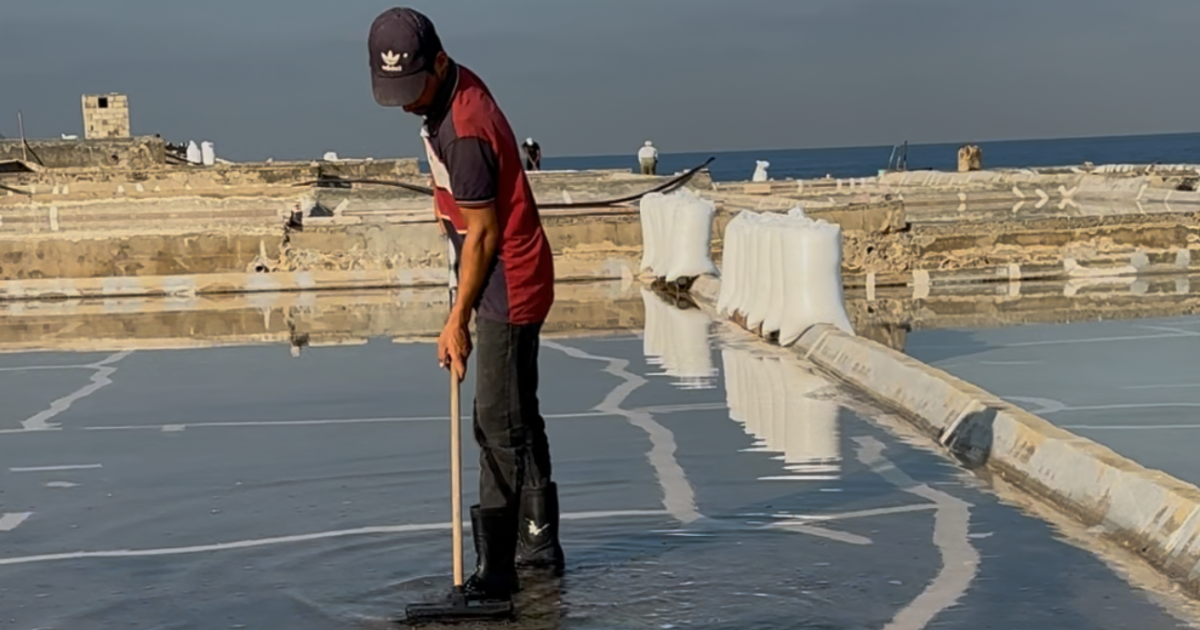
It is one of the details that challenges the idea that all salt crystals forming in seawater are essentially the same. For the salt-maker, knowing when not to harvest is just as important as knowing when to do so.
Then, the wind decides
Once the pond is ready, the edible salt can develop in two different forms: coarse salt or fleur de sel. And what determines the result is largely the wind.
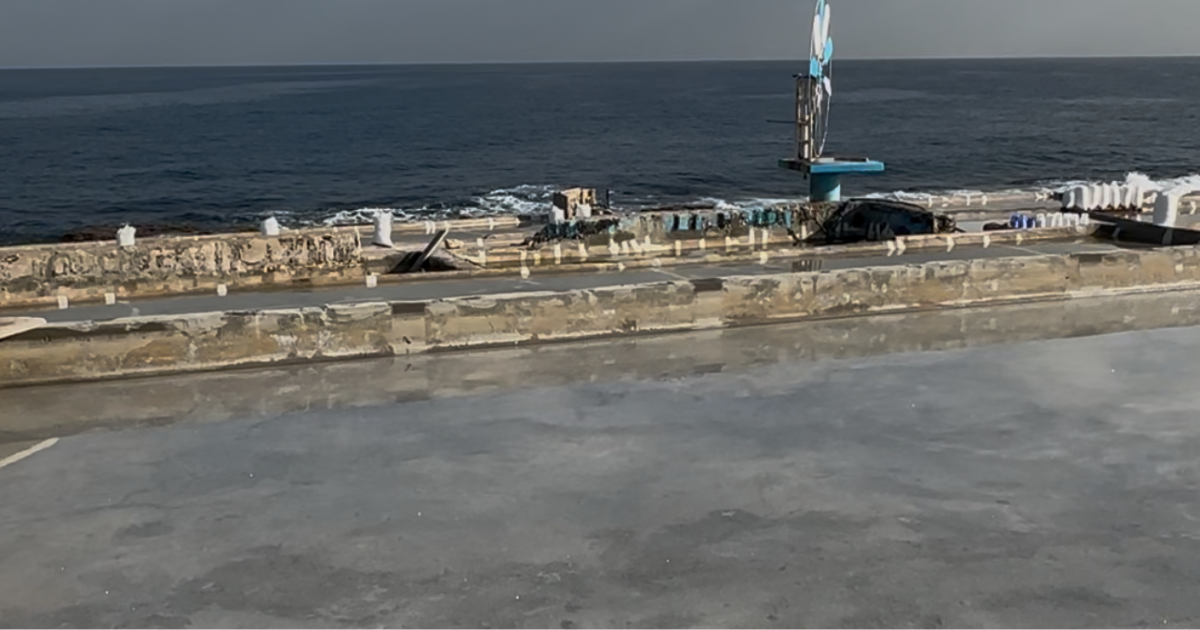
Most of the time, the wind in Anfeh is southwesterly, coming in from the sea. Because it carries humidity, it encourages coarse salt crystals to form at the bottom of the pond.
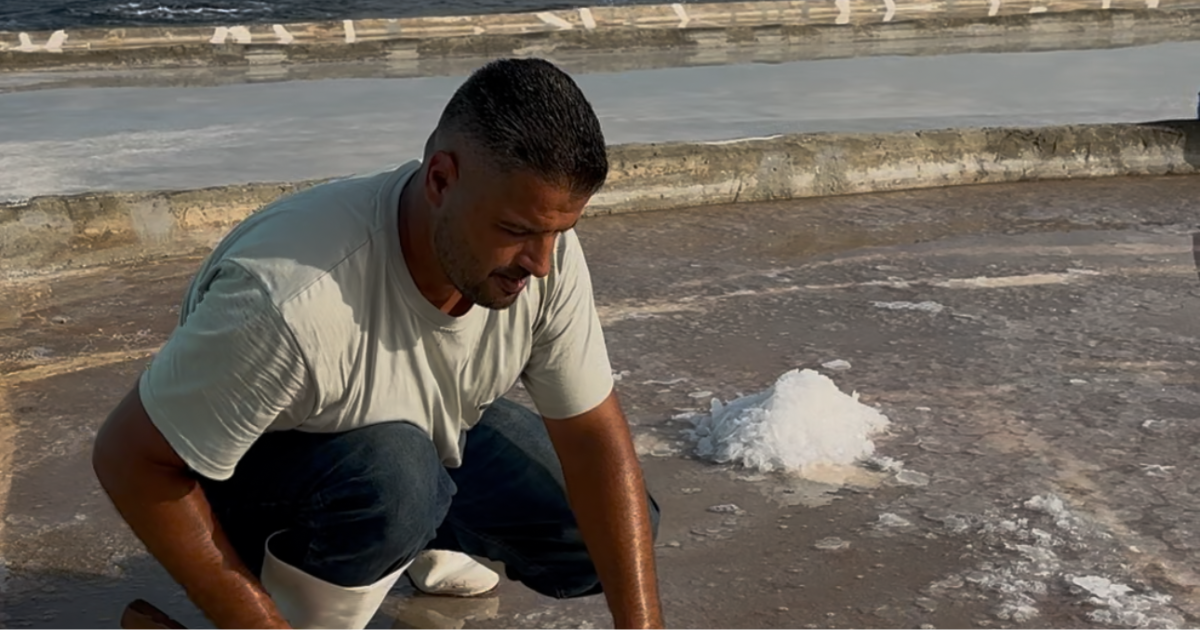
Fleur de sel is different. It appears only under much rarer and more precise conditions, when the environment allows delicate crystals to form at the surface. It cannot simply be scheduled or produced on demand. The salt-maker has to wait for the right combination of conditions.
A process that depends on reading nature
That is perhaps what makes traditional salt-making so different from the simple image of seawater evaporating under the sun. The process is structured, but it is never completely controlled.
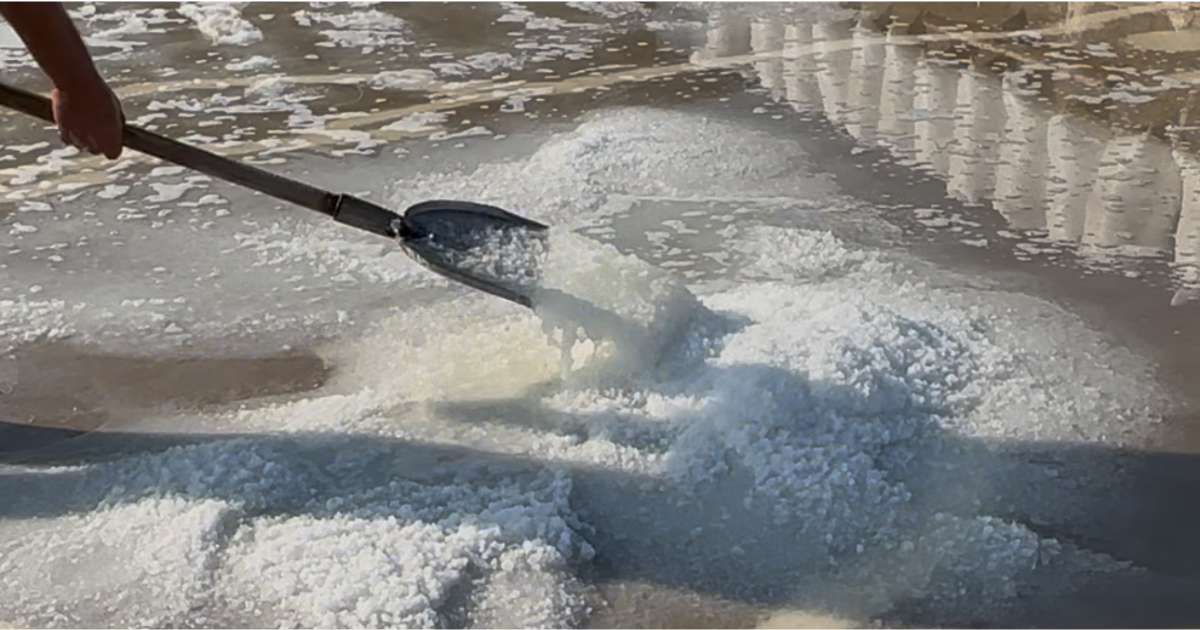
There are stages to follow and days to count, but there are also things that cannot be forced: the direction of the wind, the level of humidity, the concentration of the water, and the moment at which the salt begins to change.
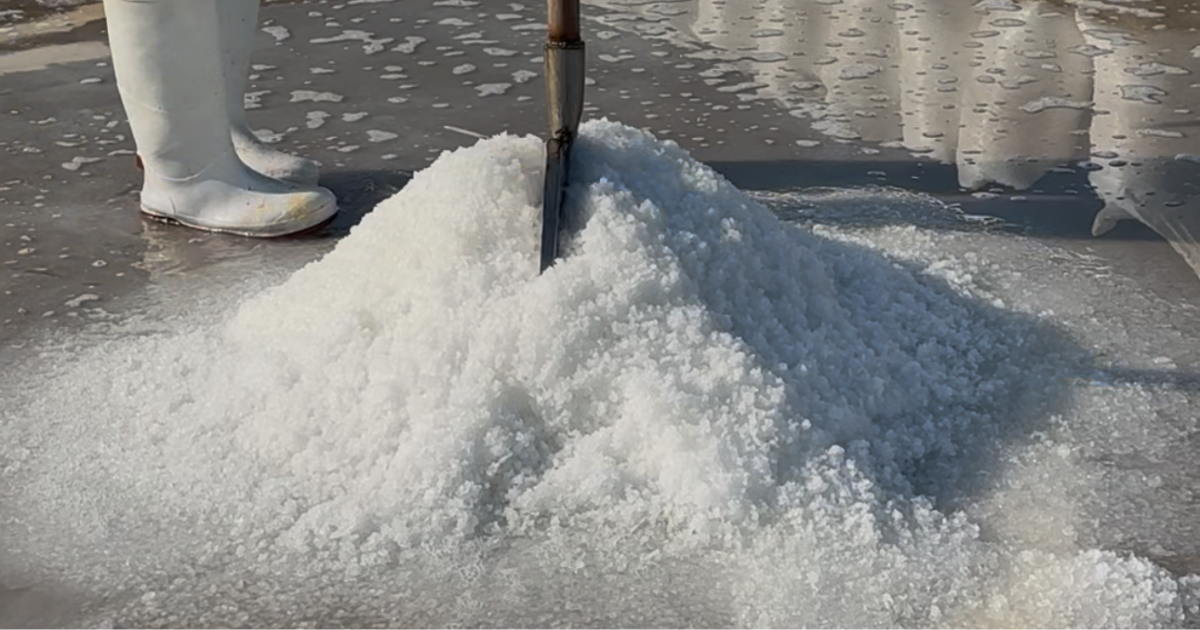
It explains why generations of salt-makers developed such a close relationship with their surroundings. The work depends not only on completing a sequence of steps, but on learning how to read what is happening inside the ponds.
And sometimes, the most important part of the process is simply knowing when to wait.
Discover Evaura on Wakilni Marketplace.

 Track Orders
